Moving home? Here's your step by step guide
Let's face it, moving home can be exciting. But sometimes, it's also stressful. And even though you've bought a house before, it's useful to refresh your memory about the steps involved - from finding a new property to sorting out the money and legal side of things.
Also, to make matters more complicated, you may also be selling your current home this time around, as well as buying a new one.
But don't worry. We're here to give you some valuable help and support on what you need to know in the form of this handy online guide. It's packed full of practical tips and checklists to get you right back into the swing of moving.
YOUR HOME MAY BE REPOSSESSED IF YOU DO NOT KEEP UP REPAYMENTS ON YOUR MORTGAGE
1. Work out what you can afford
How much could we lend you?
How much can you afford each month?
The upfront costs in moving
Work out your home buying budget
Choosing a mortgage
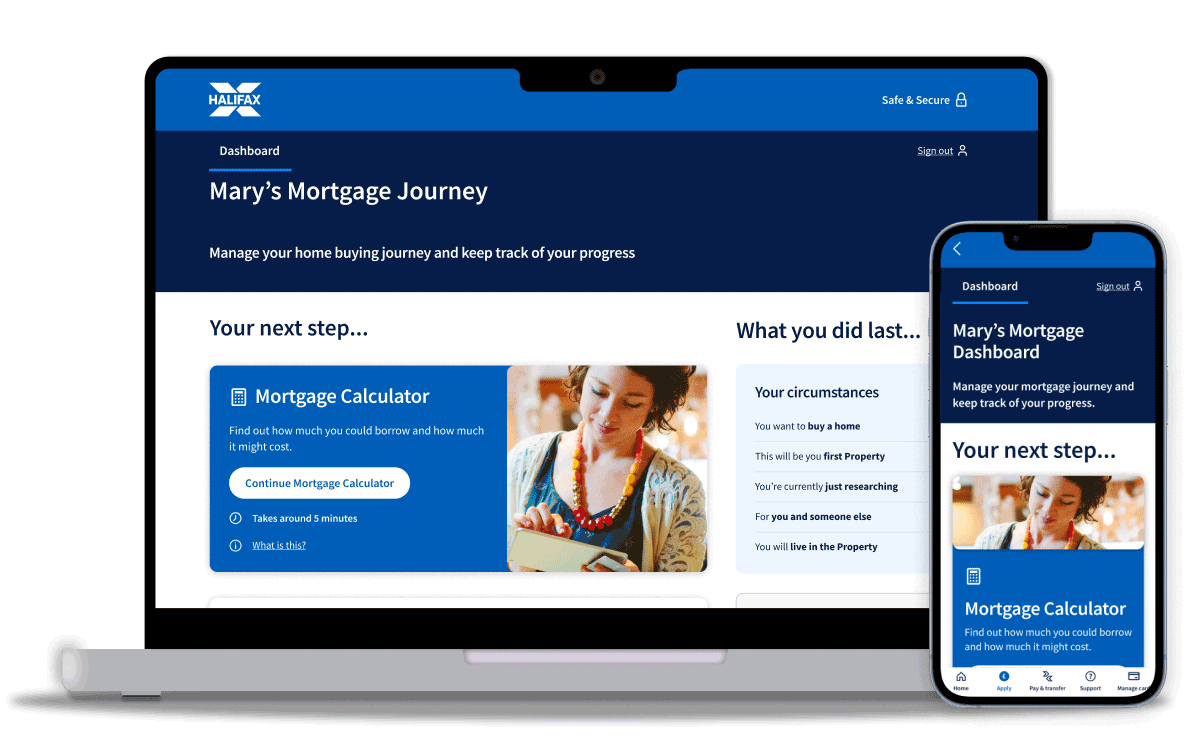
Needing a larger place? Or perhaps somewhere smaller? Whatever kind of home you're looking for, you first need to work out what kind of mortgage you can comfortably afford. A quick way to find out how much your monthly mortgage payments are is to use our easy online mortgage calculator.
How much could we lend you?
You could use our online calculator to get a rough idea of how much you might be able to borrow.
Or to get a better indication we can give you a Mortgage Promise in just fifteen minutes. A mortgage promise will tell you in just fifteen minutes if we think we can give you a mortgage and how much you could borrow. This could put you in a strong position when making an offer on a property, because it's proof that you're serious and have looked into how you'd get the money to buy it.
To request a Mortgage Promise simply pop into one of our branches, call us on 08458 50 37 05 and speak to a mortgage specialist, or use our call back form and one of our mortgage specialists will call you back. They'll run a quick check on things like your address history, current earnings and any outgoings such as loans and credit cards that you might have.
Of course, our Mortgage Promise is subject to a satisfactory valuation of the property you're buying and the information you supply being correct.
How much can you afford each month?
While it might be tempting to take out the maximum mortgage possible, you've got to be sure you can cover all your monthly bills and have enough left each month to enjoy life.
This checklist will help you work out what you can afford each month and the most you can spend on a home. Remember, if you're moving to a larger home, some of the costs may be higher than what you pay now.
The upfront costs in moving
Hopefully you'll have enough money (equity) in your property to cover the deposit needed for your next home. But don't forget about the one off charges too. These will vary, depending on things like: where you choose to buy, what product fees you're charged and what type of survey you think the property should have.
| House buying costs | What's involved |
|---|---|
| Legal fee | A conveyancer carries out all of the legal work involved in buying a property. |
| Valuation | The lender arranges a mortgage valuation on the property to help them decide whether they'll offer you a mortgage. |
| Survey fee | For added peace of mind, a survey goes further - checking the building is sound and highlighting major problems. |
| Disbursement fees | The conveyancer pays these to other third parties on your behalf, so he can obtain searches on the property. |
| Stamp duty land tax | This has to be paid to the government on any property purchased at £125,001 or more. Visit www.hmrc.gov.uk to find out more. |
| Product fee | Lenders sometimes charge a product fee as part of a mortgage deal. It helps to keep the interest rate on the initial deal lower than it would have been if a fee had not been payable. |
| Mortgage account fee | The fee is to cover the setting up, routine maintenance and closing down of the mortgage account. |
| Higher Lending Charge | Some lenders charge this if you're borrowing more than 90 per cent of the property value. Halifax don't currently charge for this. |
| Removal costs | You may need a removal firm or to hire a van to move your belongings to your new home. Getting family and friends to help instead is an alternative way to save money. |
| Buildings insurance | Buildings insurance covers you financially against damage to the structure of your home. This includes permanent fixtures and fittings against loss or damage by an insurable peril such as fire or flood. |
| 10% contingency | For peace of mind it's worth having additional savings to cover any unexpected costs. |
Work out your home buying budget
With help from one of our mortgage specialists, complete the calculation below to work out how much you need to buy a home.
Size of mortgage you can borrow + Size of deposit you have - Your house buying costs = Your house budget
Choosing a mortgage
Unless you've found a house you want to buy, you don't have to worry about choosing a mortgage just yet. But if you want to get ahead, do your research early - see Applying for a mortgage.
Let's be honest
We understand that choosing a mortgage can be confusing. So please pop in to your local branch or call 08458 50 37 05 to speak to one of our mortgage specialists. They can really help you to work through your options.
We're here to help and talk you through all the options available
- Simply pop in to one of our branches, or book a branch appointment with a mortgage adviser using our online form
- Call us on 08458 50 37 05 and speak to a mortgage specialist
- Use our call back form and one of our mortgage specialists will call you back
YOUR HOME MAY BE REPOSSESSED IF YOU DO NOT KEEP UP REPAYMENTS ON YOUR MORTGAGE
2. Selling and buying
Selling your home
Ask for a realistic price for your property
Spruce up your property
Make viewing happy
Buying a home
Begin looking for properties
Going to see properties
Freehold and leasehold. What's the difference?
Selling your home
Ask for a realistic price for your property
To make sure you're being realistic about the price you put your house on the market for, get a number of estate agents to value your property, rather than just one. Ask each of them for three figures:
- The highest price they think you could get
- The price they think you should ask for
- The price they think you'll receive.
What is your current property worth?
Take an interest in properties similar to yours that are up for sale to see if your selling price is realistic.
Spruce up your property
Making someone fall in love with your property isn't as simple as adding a few nice touches. Often it's getting back to basics to really let your property shine.
- De-clutter. Too much stuff will make your home seem smaller. So maybe consider popping spare furniture into storage until you've sold your property.
- DIY. Now's the time to finish off those jobs and maybe tidy up tired paintwork and the garden.
- Clean. Maybe think about getting the professionals in to really get your home to sparkle.
- Increase your energy efficiency. An Energy Performance Certificate (EPC) is needed by law, no matter the age of your house. The certificate gives your home a rating A-G, similar to the ratings on washing machines and fridges. You could increase this rating based on the details in the report accompanying the certificate.
Make viewing happy
When it comes to showing potential buyers around your home, leave it to the experts where possible - the estate agents. They're trained to make sure anyone viewing your home knows all the plus points of your property and the area.
However, if you are showing people around your home it's worth taking note of these few tips:
- Create a good first impression and be organised. Try to avoid a house full of kids and pets when you've got a viewing.
- Show the rooms in the right order by starting with the most impressive room first. If you're entering a small room, let the viewer lead the way, so you don't fill the space yourself.
- Try to avoid discussing the price. Leave that to the estate agent.
Buying a home
Begin looking for properties
Maybe you've already found a property that you're interested in? Or perhaps you just have a list of things that are important to you - an extra bedroom for your growing family or perhaps outdoor space to enjoy the summer?
Either way, your priorities can shift once you start looking, so it helps to write down the basics, before you begin.
Start your search
A good place to start searching for properties is to contact local estate agents. Or simply drive around the area you are interested in buying. There are also some useful websites that can tell you lots about areas and properties before you even set foot in them. Have a look at:
www.rightmove.co.uk
www.globrix.com
www.findaproperty.com
Sites such as PropertySnake, Globrix and Rightmove also provide alerts when an asking price is reduced. And Rightmove's Draw a Search lets you draw with your mouse over an on-screen map to see the exact location you're looking in. It then brings up relevant properties and their details for that area.
Nestoria and Zoopla add data on the neighbourhood to display local schools and pubs as well as crime statistics.
Put your postcode into the Environment Agency website and it will show you areas that are liable to flooding or if the ground underneath might be contaminated.
You can see the outside of almost all homes in the UK now, thanks to Google Earth.
Going to see properties
When you see somewhere you like you should arrange a viewing, usually with an estate agent, the seller or both. Whoever is there, it's important not to feel rushed or pressured. You're thinking about spending a lot of money, so take your time and ask all the questions you want to. And do some initial research.
Your mortgage specialist can also help. They can go through your mortgage options with you and give information on what Halifax look at when considering your mortgage application. You can also ask them about how we'd carry out a mortgage valuation on the property you're hoping to buy.
Searching tips
- View with a friend or family member - they may spot something you don't
- Take notes - this viewing checklist may help
- A tape measure might come in useful too. Properties can be pared back to make a room look deceptively big. Equally, clutter could make a good space feel small.
- Don't be blinded - decoration is easy to remedy, other things aren't
- Don't ignore any pungent odours. They could indicate damp, which can be a serious problem. Other smells could be from pets or smokers etc, which can be removed by fitting new carpets.
- Have a second viewing at a different time on another day. Things like neighbour noise, light and traffic can vary dramatically.
Freehold and leasehold. What's the difference?
Most properties in England and Wales are freehold, but many flats and some houses are leasehold.
Freehold
The sale includes the property and the land on which the property is built. This means you are the absolute owner of the property and the land that it's on.
Leasehold
Instead of owning the property outright, you buy a lease for a set number of years. In most cases you'll pay an annual ground rent and often a service charge too if you're buying a flat in a shared building. You'll need to buy an extension to the lease before it expires or the freeholder will no longer allow you to keep your property on the land.
Buying a leasehold property?
Then you need to understand all the implications and obligations. Your conveyancer will need to do some extra work, which may mean a higher fee.
We're here to help and talk you through all the options available
- Simply pop in to one of our branches, or book a branch appointment with a mortgage adviser using our online form
- Call us on 08458 50 37 05 and speak to a mortgage specialist
- Use our call back form and one of our mortgage specialists will call you back
YOUR HOME MAY BE REPOSSESSED IF YOU DO NOT KEEP UP REPAYMENTS ON YOUR MORTGAGE
3. Accepting and putting in an offer
Selling
Selling your home
Accepting an offer
Buying
Putting in an offer
Changing your offer
Selling your home
Someone has viewed your property and has now put in an offer. Congratulations! Now you've got to decide whether to accept it.
- Your estate agent will let you know if they think it's reasonable. But ultimately if you want to hang on for a better offer, it's your decision.
- Is the offer high enough to allow you to afford the property you want? Don't forget the upfront costs and any work you might need to do on your new property too.
- Are the potential buyers in a strong position? If someone has sold their house and is ready to move, that can be worth much more to you than a higher bid from someone who hasn't even started marketing their property.
Sealed bids
If you're lucky enough to have lots of interest in your property, you might even ask potential buyers to go for 'sealed bids' - also called ‘best and final offers'. This is when you ask everyone who's interested to put in a bid by sealed envelope by a certain date. You and the estate agent can then assess which is the best offer.
Accepting an offer
You should do this in writing - your estate agent will take care of this. Offers are normally accepted 'subject to contract', so you're not legally bound to anything at this stage. This means you or the buyer can pull out at any time.
All too often there are delays because conveyancers are waiting for the paperwork to come through. But by being proactive you can make sure it's all to hand in advance and avoid any hold ups.
Two phone calls can save you time in the long run.
1. If your mortgage lender has kept the deeds of your property, ask them to send them to your legal adviser.
2 .Get your legal advisor to dig out the contract you signed when you bought your current place.
Putting in an offer
Once you've found the house you want to make your next home, it's time to take the plunge and put in an offer. Unless it's a
private sale, only talk to the estate agent, not the seller at this stage.
Remember
- The asking price is what the seller hopes to get, not necessarily what they will get
- Avoid playing your best card first. Give yourself room to manoeuvre.
- Don't worry if your first offer is turned down. You can still increase it if you want, or can afford to.
What to ask yourself when making an offer:
- How much do you want the property?
- How much can you afford and are other people interested?
- Does it need a lot of work doing to it?
- Has it been on the market long?
What happens once your offer's been accepted?
No doubt you'll feel excited, and a little apprehensive too. After you've discussed things in person with the estate agent, they'll usually write a letter confirming:
- everything you consider relevant to the deal, e.g. fixtures and fittings
- how you'll pay for the property (such as your mortgage).
It's a good idea to have everything in writing from the start to make sure your offer is taken seriously.
Gazumping
It's pretty uncommon, but this is where the seller has accepted your offer for their property, allows you to proceed, and then accepts a higher offer from a third party.
If this happens, it can pull the rug from underneath your feet. It works the other way too, when a buyer pulls out. This is known as gazundering. Remember, the deal's still on the table until contracts are signed and exchanged.
Changing your offer
There may be times when you want to change the offer you've made. For instance, if you've had a survey done, it may show up repair work that needs doing. In which case, find out how much it would cost to fix and forward the quotes to your conveyancer.
This will help start a conversation around potentially reducing your offer. If you decide to go ahead your estate agent will usually handle the negotiation. But remember:
- This could delay your move. Negotiating can take time and slow down the process of buying and selling your home
- Reducing your offer at this stage to cover work could be difficult for the seller to stomach. To help with negotiations, you may need to compromise by offering to cover 50% of the costs
Next > 4. Applying for a mortgage
We're here to help and talk you through all the options available
- Simply pop in to one of our branches, or book a branch appointment with a mortgage adviser using our online form
- Call us on 08458 50 37 05 and speak to a mortgage specialist
- Use our call back form and one of our mortgage specialists will call you back.
YOUR HOME MAY BE REPOSSESSED IF YOU DO NOT KEEP UP REPAYMENTS ON YOUR MORTGAGE
4. Applying for your mortgage
Mortgage types
What are the repayment methods?
Fee or no fee?
Need some help choosing?
Completing your application
Are you self-employed?
How your mortgage application is assessed
Mortgage types
Here's a quick recap on the two main types of mortgage available:
| Mortgage type | Pros | Cons |
|---|---|---|
| Fixed rate - This fixes your interest rate for a specified period of time and won't change until an agreed date. | You'll enjoy certainty and peace of mind. You know your interest rate won't change during the fixed rate period, meaning that even if interest rates increase during that period, your rate won't be affected. | Rates are usually higher than on tracker products. And if interest rates fall you won't see your payments drop with them. If you wanted to repay your mortgage or switch to another mortgage deal during the fixed rate period you'll probably have to pay an Early Repayment Charge. |
| Tracker rate - Typically this moves in line with the Bank of England Bank rate. So it will be the same as, or a percentage above or below the bank rate, until an agreed date. So the tracker rate you pay can go up or down. | Whenever the Bank of England Bank rate falls, you will benefit from the same reduction in your rate unless this would take the rate below a minimum rate that you may have on your mortgage product. In which case, your rate would stay the same until the Bank of England Bank rate increases again. Please refer to your mortgage offer for details of any minimum rate that may apply to your product. | If the Bank of England Bank rate rises, your payments go up with it. In some cases you may have to pay an Early Repayment Charge if you want to repay your mortgage or switch to another mortgage deal during the tracker rate period. |
What are the repayment methods?
Repayment
The monthly payments you make gradually pay off the amount you owe, as well as paying off the interest charges.
Interest-only
Your monthly payments pay only the interest charges on your loan, not the loan amount - so are much smaller than what you'd pay with a repayment mortgage. And you'll need to know from the start how you are going to find a lump sum to repay the loan at the end of the term.
WARNING ABOUT INTEREST-ONLY MORTGAGES
An interest-only mortgage is riskier than a repayment mortgage. This is because:
- in most cases, there's no guarantee your repayment plan will fully repay your outstanding balance (capital amount) at the end of the mortgage term
- it's your responsibility to ensure you have enough money in place - or you risk your home being repossessed.
What we'll do:
- We will ask for proof of your repayment vehicle before agreeing an interest-only loan
- From time to time we may ask you to show that your plans are on track to repay the capital amount
- If we spot a problem, we may get in touch to discuss your options - such as changing some (or all) of the mortgage onto a repayment basis.
We're here to help and take you through all the mortgage options available. However, Halifax can't offer advice regarding repayment plans. So for this you should talk to an independent financial adviser.
Fee or no fee?
Some mortgages come with a product fee attached.
As a rule of thumb, you get a lower initial mortgage rate in return for paying a higher fee. Or a lower fee (and in some circumstances, no fee) for a higher initial mortgage rate.
If you do have to pay a product fee it could be added to your new mortgage. You can then either pay the fee off immediately or leave it on your mortgage to spread the cost over the life of your mortgage. Bear in mind that interest will be charged on it as part of your main mortgage.
Need some help choosing?
We're here to help and take you through all the mortgage options available. However, Halifax can't offer advice regarding repayment plans. For this you should talk to an independent financial adviser.
Cashback
Some of the mortgage products also offer a 'cashback'. This is an extra lump sum of cash at the beginning of your mortgage for you to spend on anything you like. You may, however, be charged a higher rate of interest.
What's an APR?
An APR (Annual Percentage Rate) is a calculation of the total cost of borrowing over the life of the loan. All lenders use the same calculation, so it's easy to compare deals from different lenders.
Get a quote
We'll be able to give you a quote called a Key Facts Illustration (KFI). It sets out details of the mortgage product you're interested in. All mortgage lenders are required to provide a Key Facts Illustration in the same format, so it's easier for you to compare different mortgage deals.
Completing your application
Your offer has been accepted. Now it's time to get down to the nitty gritty and make your application. Our mortgage specialists can help you complete the forms, over the phone or in your local branch.
Get your information together
| What you'll be asked for | What you may need to provide |
|---|---|
| Proof of your identity |
|
| Rent history (if this applies) | Bank statement showing your last twelve monthly payments. |
| Previous addresses | Details of any other addresses you've lived at in the last three years. |
| Insurance and protection details (if this applies) | Current household insurance documents and life and/or critical illness policies. |
| Your credit commitments | Any information on:
|
| Your standard earned income | If you're employed:
|
| Other income | Any information on:
|
Are you self-employed?
We will see you as self-employed if you:
- have a shareholding in a company of 25% or over
- have a partnership interest in a business, irrespective of the percentage of your shareholding
- own your own franchise, or
- sub-contract and get your income from one or more contracts.
How your mortgage application is assessed
To help us make sure your repayments don't become a problem for you we'll look at the information you have given, along with your credit history.
Your Halifax mortgage specialist pledges to:
- let you know the criteria we use to assess your application
- provide you with a personalised mortgage promise for how much we could lend you - this won't leave a lasting record on your credit profile
- if your application is unsuccessful, we'll help you understand why
- whether your application is successful or not, we'll provide you with an action plan to move things forward.
Find out more about how we assess your application.
We're here to help and talk you through all the options available
- Simply pop in to one of our branches, or book a branch appointment with a mortgage adviser using our online form
- Call us on 08458 50 37 05 and speak to a mortgage specialist
- Use our call back form and one of our mortgage specialists will call you back.
YOUR HOME MAY BE REPOSSESSED IF YOU DO NOT KEEP UP REPAYMENTS ON YOUR MORTGAGE
5. Protect your home and family
If you're buying a larger home you might end up with more to insure. So it's important to check that you have the right level of protection in place. Then you can enjoy some welcome peace of mind, that you are protected should the worst happen.
Protecting your home
Buildings insurance
This covers you financially against damage to the structure of your home from things like fire and high winds. All lenders will insist that you take this out – it's not optional.
When you choose your policy, check the level of cover as well as the cost. Buildings insurance covers you for the cost of rebuilding your home, rather than what you paid for it.
You can get an estimate of your rebuild cost from the Association of British Insurers.
Contents insurance
This covers your home contents, such as your TV and audio equipment, clothing and furniture, against damage and theft. If you're on a tight budget, it's tempting to skip this. But just imagine how much it would cost to replace everything in your home.
To avoid being under-insured list down everything you own and tot up the value, you might be surprised by how high it is. Get more information about the cover Halifax offer.
Top tips for getting the best deal
- Check to see if your insurer charges extra to pay your premium monthly
- Combining your buildings and contents policies together could save you money.
Protection for you and your family
How would you or your loved ones manage if one of you got ill or even died? With the right kind of cover, you could receive a lump sum payment which could be put towards repaying any outstanding mortgage amount.
As your mortgage is likely to be the biggest debt you'll ever have, it's worth protecting it.
The kind of cover you could consider include:
- Critical Illness with Life Cover
- Critical Illness Cover on its own
- Life Cover on its own.
If you're not sure about what insurance you and your family need, please speak to one of our mortgage specialists.
We're here to help and talk you through all the options available
- Simply pop in to one of our branches, or book a branch appointment with a mortgage adviser using our online form
- Call us on 08458 50 37 05 and speak to a mortgage specialist
- Use our call back form and one of our mortgage specialists will call you back.
YOUR HOME MAY BE REPOSSESSED IF YOU DO NOT KEEP UP REPAYMENTS ON YOUR MORTGAGE
6. Get the survey and legal work underway
Arranging a valuation
Choosing the right survey
Arranging the survey
Sort out the legal work
Exchanging contracts
Exchange to completion
Arranging a valuation
Once you've completed your mortgage application, a valuation will be carried out on the property. This is done for us and is to make sure that it's acceptable to us as security for the loan and worth enough to support the amount we're lending you.
For additional peace of mind, a survey goes much further. It checks your property is sound and flags up problems like roof damage. Problems like these can cost a lot to fix, so unless you're buying a new build property it makes good sense to spend a little extra for a detailed survey.
Choosing the right survey
There are two main types of survey to choose from: Survey and Valuation and the more comprehensive (and therefore more expensive) Building Survey (also known as a full structural survey).
The table below outlines the differences to help you decide which one is right for you.
| Survey and Valuation | Building Survey | |
|---|---|---|
| What is it? | A survey of the property's condition and market value | A detailed survey of the structure, inside and out |
| What type of property is it suitable for? | Conventional properties up to 150 years old | Listed buildings, older or unusual buildings and properties that have been extensively renovated or require extensive work |
| What does the survey look at? | Any urgent problems that need repairing | All accessible parts of the property, inside and out - and specific areas you're concerned about |
| What will it tell you about the property? | The general condition, including major faults that may affect the value, and should be sorted out before you sign a contract as well as likely issues that will require maintenance. It also provides an estimated cost for rebuilding the property which can be used when arranging your building insurance | All major and minor faults, estimated repair costs and whether any special reports are needed on specific problems, such as the roof or rising damp |
| What won't it tell you? | Any detailed issues with the property and likely costs of highlighted repairs | The value of the property (unless you specifically request a valuation from the surveyor) |
| When should you have it done? | Before you sign the contract to buy | Before you sign the contract to buy |
Arranging the survey
The valuation will be carried out by a RICS qualified valuer. For a Homebuyers survey or equivalent, we can arrange this for you through Colleys (where they have coverage). Colleys are our specialist valuation and surveying service who will instruct one of their RICS qualified surveyors.
Visit Colleys to view footage of an actual survey taking place in a property and to pick up useful information.
Sort out the legal work
Choosing a conveyancer
You'll usually be asked for conveyancer details when you apply for your mortgage. They'll look after your interests and deal with the legal process involved when you're selling and buying a property.
We'll usually instruct the same conveyancer as you to act for us on the mortgage, as long as they're on our approved list.
Whether you choose a solicitor or a licensed conveyancer, it's their job to:
- guide you through the buying process
- make sure you understand the details
- speak to the seller's conveyancer
- liaise with your mortgage lender and the estate agent
- sort out the legal paperwork and run any searches
- arrange the exchange of contracts
- agree a completion date.
It's at this stage that any legal, financial or structural problems may come up. Your conveyancer is working on your behalf to protect you.
So while it might seem to be slowing things down, have patience - it's worth making sure everything is in order. There are some things you can do to help speed things along, too.
We can help with the legals
Use our Halifax Conveyancing Service to put you in touch with approved conveyancers in your area. Choose the one you want based on their price, service rating or location. You also get:
- a fixed fee - with a fully itemised quote you'll know exactly what you'll be charged right from the outset
- no move, no fee - if your move doesn't go ahead for any reason, you don't pay the legal fees (although you may have to pay the amounts paid to others, like search fees)
- progress updates, 24/7 - check the progress of your move whenever you like online, by phone, text message or post - it's up to you
- quality service, managed for you - we only use specially selected conveyancers so you know you're getting a great service.
To find out more, call us on 0845 727 3747 and ask to speak to a Halifax mortgage specialist, or pop into your local branch.
How you can help speed things along
- Call the estate agent immediately and ask them for the contact details of the seller's conveyancer to pass to your conveyancer
- Call your conveyancer and ask them to contact the seller's conveyancer straight away
- Ask the estate agent to stop marketing the property and cancel any other viewings
- Be proactive. If there are any delays, don't be afraid to talk to your conveyancer and the estate agent and ask what's going on.
Exchanging contracts
The survey's come through and any issues with it have been resolved. Your conveyancer is happy with the contract. They've got all the funds they need to cover the whole purchase price and everything's got the green light. Here's what happens next:
- Your conveyancer agrees a completion date with you and the seller's conveyancer
- You sign and then exchange contracts
- You pay the deposit (normally 10% of the purchase price).
Exchange to completion
The end is finally in sight. Now you've exchanged contracts, this final stage is all about actually transferring ownership from the seller to you.
- Your conveyancer prepares and sends a completion statement and transfer deed and mortgage deed
- You read through and sign the transfer deed and the mortgage deed and return them to your conveyancer
- Your conveyancer arranges to obtain the mortgage money from your lender and then transfers the payment to the seller's conveyancer in return for the transfer deed signed by the seller. The keys can then be released to you, usually through the estate agent
- Your conveyancer arranges for the transfer deed to be stamped. If the purchase price of the property you're buying is more than £125,000 you'll pay a government tax called 'Stamp Duty Land Tax'
- Your conveyancer will then send the transfer deed and the mortgage to the Land Registry to record you as the owner and to register the mortgage.
Congratulations - you did it! You now own your new home!
We're here to help and talk you through all the options available
- Simply pop in to one of our branches, or book a branch appointment with a mortgage adviser using our online form
- Call us on 08458 50 37 05 and speak to a mortgage specialist
- Use our call back form and one of our mortgage specialists will call you back.
YOUR HOME MAY BE REPOSSESSED IF YOU DO NOT KEEP UP REPAYMENTS ON YOUR MORTGAGE
7. Moving in and making your home your own
Moving home is an art - from the way you pack to how you support the movers on the big day. These tips below may sound trivial, but it's attention to detail that can make all the difference.
Top tips for a smooth move
Create a moving pack
Settling in
Top tips for a smooth move
- When you label each packing box, be crystal clear about how you name each room. "John's bedroom" won't mean anything to the movers, but "Front right bedroom" will
- Keep your stereo speakers away from your TV - the speakers contain magnets and can damage some TVs
- If you're doing the move yourself, keep the boxes light enough for you to carry safely.
The last thing you want when you've just moved in is to be rummaging through piles of boxes. This packing checklist may help you keep track of what's in which box and where it should go.
Create a moving pack
There's nothing more frustrating than turning up at the house with a team of thirsty removal men, and realising you've packed the kettle and tea back at the old place.
So put together a moving pack, and you'll have everything you need at your fingertips. Here's a list of the essentials:
- Kettle
- Mugs, milk, tea, sugar, teaspoon, bottles of drinking water
- Glasses
- Torch and light bulbs
- Cleaning equipment: bin liners, cloths, rubber gloves, detergent and a vacuum cleaner
- Toilet paper
- Basic tools
- Pen and paper for meter reading.
Who to notify about your new address
Before you move, it's a good idea to notify not just family and friends, but also your various service providers.
This checklist will remind you who to get in touch with.
Settling in
Make your home your own
Congratulations - you've moved into your new home! It will probably take a while to sink in that this place is really yours.
You might also be completely unfamiliar with the area. So get out and about. Take a note of the nearby street names, train stations, bus stops, local shops and markets, schools, libraries and social places.
Here are some tips on finding the right places to go, the best decorators, the best schools, recycling day etc
- Chat to neighbours and local shopkeepers. It's always good to build up relationships with people living nearby so you can help each other out when needed. Being new is the perfect excuse for saying 'hello' - it could even mark the start of a good friendship.
- Pick up detailed information about events and services from local newspapers and websites such as www.knowhere.co.uk
- Ask your mortgage specialist, conveyancer or estate agent for their personal experiences.
Remember, we're on hand if you have any questions. You can arrange a Mortgage Review when it suits you in the future, to chat through any concerns you might have or to simply check you are still on the right deal for you.
Simply pop into one of our branches or call us on 08458 50 37 05 and speak to a mortgage specialist.
Make your home safer
Take these steps, and as well as making your home more secure, they could lower your home insurance premiums:
- Install window locks
- Join a neighbourhood watch scheme
- Fit a fire and burglar alarm
- Replace your locks.
We're here to help and talk you through all the options available
- Simply pop in to one of our branches, or book a branch appointment with a mortgage adviser using our online form
- Call us on 08458 50 37 05 and speak to a mortgage specialist
- Use our call back form and one of our mortgage specialists will call you back.
YOUR HOME MAY BE REPOSSESSED IF YOU DO NOT KEEP UP REPAYMENTS ON YOUR MORTGAGE
Buying a property in Scotland?
Chances are you already know things are different. So to help you, here's a look at what to expect and the home-buying process, step by step.
A solicitor and estate agent, all in one
Most solicitors in Scotland are usually also estate agents. Groups of solicitors in a particular area will advertise property collectively through Solicitors' Property Centres.
You do get estate agents in Scotland too, but they have a smaller share of the market.
Home Report packs
In Scotland, a seller must prepare a Home Report pack. If you're a serious buyer, you'll be given a copy. It tells you about the condition and value of the property, and it's made up of three parts:
| What it is | Who does it | What it's for |
|---|---|---|
| Property Questionnaire | The seller | Gives you information about Council Tax banding and other costs |
| Energy Report | A surveyor | Assesses the energy efficiency of the home and its environmental impact. It also recommends ways to improve its energy efficiency |
| Single Survey | A surveyor | Tells you about the condition of the property, gives you a valuation and an accessibility audit for people with particular needs |
Surveys - is the Single Survey enough?
Even though there's the Single Survey, a mortgage lender may insist you pay for another valuation. If the property is old, or the Single Survey flags up some issues, consider getting a structural survey done as well.
Buying a property from offer to completion, step by step
You've seen a property you like - now what?
Step 1: Noting an interest
When you want to make an offer your solicitor may recommend 'noting an interest'.
This puts you under no obligation. It just means the seller's solicitor or estate agent will let you know if anyone else is interested.
Step 2: Making an offer
In Scotland, the seller invites offers above the asking price through a sealed bids system. That means anyone wanting to buy puts in a bid in writing that the other bidders can't see.
Your solicitor does this for you and your offer will include a price, date of entry, and a series of conditions regarding the property.
When deciding what offer to make, you'll need to take into account how many other bidders you're up against.
But remember, sellers don't always go for the best price. They'll also be interested in how soon you can move.
Top tip: When you make your bid, try to avoid a round figure and put in an odd amount, like £100,111. That way you won't tie with other bidders.
Step 3: From negotiation to contract
If your bid is successful, the seller's solicitor will reply in writing with their conditions. This exchange of letters - or 'missives' - continues until everyone's happy with the conditions.
The final missive is a binding contract. This means neither you nor the seller can back out without having to pay compensation. Therefore, it is essential that your mortgage has been fully approved prior to this stage.
Your deposit
Your solicitor will hold your deposit in a special account, where it will earn interest until the sale. It's usually transferred 7-10 days before you get the keys, but this varies. Estate agents aren't allowed to hold deposits.
Step 4: The final steps
Your solicitor now prepares several documents. These include a 'Disposition' which will transfer ownership of the property to you.
You need to make sure your solicitor gets all the funds he needs ahead of the settlement to cover the whole purchase price, any stamp duty and title registration.
Step 5: Completion
It's the date of entry. Your solicitor sends the funds to the seller's solicitor.
Your solicitor in turn receives the signed Disposition, other documents and the keys to your new home (unless you've arranged to collect the keys on a different day).
We're here to help and talk you through all the options available
- Simply pop in to one of our branches, or book a branch appointment with a mortgage adviser using our online form
- Call us on 08458 50 37 05 and speak to a mortgage specialist
- Use our call back form and one of our mortgage specialists will call you back.
YOUR HOME MAY BE REPOSSESSED IF YOU DO NOT KEEP UP REPAYMENTS ON YOUR MORTGAGE